September 03, 2010

Foundation course


The foundation course for the 85th batch of IAS/IPS/IFS/IFos started at Lal bahadur shastri academy of administration, Mussorie on 31st August 2010. Her excellency Margaret Alva, governor of uttrakhand had come to inaugurate the course. I am fortunate to undergo the course along with some of the most intelligent and compassionate youngmen and women of our country.


I must say that each of my batchmates here have something unique about them and are a source of inspiration. I would like to write about a gentleman with whom I had gone for a sightseeing trip around mussorie. He hails from a small village and had started his career as a sub-inspector. However, he always had a burning desire to crack civil services. Despite his hectic schedule of 12 hours of taxing duty, he would come home and prepare for the exam. He cracked the exam in his very first attempt hitting the bulls eye and is now an IAS officer. He will remain a source of inspiration to me and for many people for a long time to come.


August 12, 2010

A new journey


Finally, after having cleared the civil services exam 2009 with all India rank 84, I have got my service allocation today. I have got into the Indian Police Service, which was my first choice. I decided to enter the civil services in 2005 after an incident involving my mother. A gang of robbers had broken into my house and looted everything after assaulting my mother. Although they were caught by the police and were punished in the court, I felt the police could have been much more efficient. I wanted to do more than just being cynical about our system and resigned my lucrative job to prepare for the civil services. I followed the Mahatma's saying "Be the change you want to see in this world".
In retrospect, I feel happy that my hardwork has paid off. However, this is just the beginning. There is no end to what an IPS officer, or for that matter any civil servant, can do to bring in a positive change to this society.
I hope this journey would be a fulfilling experience for me and for the people I serve.
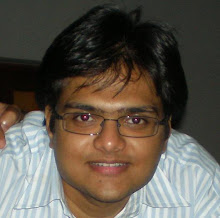
V. Vikraman I.P.S.,

April 26, 2010

Personal effectiveness scale

We had a training session on "accepting ownership" at my office. we were asked to fill a sheet as a part of that training, I felt I should post it for everyone's benefit.

The instrument is for your own benefit, so be frank in your responses.
Read each statement below and indicate how much it is true of your behaviour, by using the following guidelines.

Write 4: If it is most characteristic of you, or if you always or most often behave or feel this way.
Write 3: If it is fairly true of you, or you quite often behave or feel this way.
Write 2: If it is somewhat true in your case.
Write 1: If it is not true of you, or if you only occasionally feel or behave this way.
Write 0: If it is not at all characteristic of you, or you seldom feel or behave this way.

1. I find it difficult to be frank with people unless I know them very well.
2. I listen carefully to others' opinions about my behaviour.
3. I tend to say things that turn out to be out to place.
4. Generally, I hesitate to express my feelings to others.
5. When someone directly tells me how he feels about my behaviour, I tend to close up and stop listening.
6. On hindsight, I regret why i said something tactlessly.
7. I express my opinions in a group or to a person without hesitation.
8. I take steps to find out how my behaviour has been perceived by the person with whom I have been interacting.
9. I deliberately observe how a person will take what I am going to tell him, and accordingly communicate to him.
10. When someone discusses his problems, I do not spontaneously share my experiences and personal problems, of a similar nature with him.
11. If someone criticizes me, I hear him at that time but- do not bother myself about it later.
12. I fail to pick up cues about others' feelings and reactions when i am involved in an argument or conversation.
13. I enjoy talking with others about my personal concerns and matters.
14. I value what people have to say about my style, behaviour etc
15. I am often surprised to discover (or told) that people were put off, bored or annoyed when I thought they were enjoying interacting with me.


Score sheet

For the questions that have Star(*) symbol in the response table below, use the table to reverse your response. For example, if you had originally indicated '4' as your response, look at the table and put '0' beside it. For other questions (non starred) simply write the number you had originally indicated as response to that question.

TABLE

Original responses

Reversed responses

0

4

1

3

2

2

3

1

4

0


Now, lets go to the response table. Write your response and calculate the totals for each response column.

Item

Response

Item

Response

Item

Response

*1

2

*3

*4

*5

*6

7

8

9

*10

*11

*12

13

14

*15

Total

Self disclosure

Openness to feedback

Perceptiveness


B. Write Low(L) or High(H) for each of these three total scores; If the score is 11 or below, write L; if the score is over 11 write H.

Mark one category out of the eight given below, based on the combination of your totals. This is your effectiveness type.

Category

Self-disclosure

openness to feedback

Perceptiveness

Effective

High

High

High

Insensitive

High

High

Low

Egocentric

High

Low

Low

Dogmatic

High

Low

High

Secretive

Low

High

High

Task-obsessed

Low

High

Low

Lonely Empathic

Low

Low

High

Ineffective

Low

Low

Low


In the table where you have filled in values (after reversing), prepare an action plan for scores equal to or below 2 to improve your behaviour and become more effective.

January 14, 2010

Is India really a 'soft' state?

One of my friends sent me an email which had compared the military prowess of China with that of India. The email tried to prove that India is not prepared to face a threat emanating from Beijing, and this is evident from India’s ‘soft pedaling’ every issue of strategic importance. There have been many instances in the past which are quoted to say that India is a ‘soft’ state which hesitates to take stern action even when its interests are at stake.

The exchange of terrorists for the hostages of the hijacked Indian plane in 1999, muted response towards Pakistan in the aftermath of the 26/11 Mumbai attacks where some prominent persons wanted India to go in for an all out war against Pakistan and ‘finish them off’, the recent LTTE episode when India did not take sides are shown as some examples of the ‘spinelessness’ of the Indian establishment.

However, in my opinion nothing can be farther from truth. India has shown exemplary bravery and heroism in the International affairs where it really mattered. The following arguments would prove the point.

India and NAM

During the cold war era, when country after country was aligning with either USA or USSR, it required a lot of guts from a third world country to stay away from any of these groups. Not only did India stay away from either of the camps, it was the founding member of the NAM (Non-aligned movement) where it sought to bring together a third non-aligned world.

India and the Bangladesh liberation war

India has not only protected her interests – such as during the kargil conflict, but has also protected the interests of her neighbours. It is a known fact that the people of East Pakistan (now Bangladesh) had been treated like second class citizens in their own country. For instance, When the Awami league (a major party in east pakistan) led by sheikh mujibur rahman won a landslide victory in the national elections of 1970, he was not allowed to form the government and the elections were cancelled. Not only this, the Pakistani army launched large scale genocide against its own people in East Pakistan (operation searchlite).

Despite the weighing international opinion against India to do anything ‘adventurous’, India did intervene and liberated her brothers in East Pakistan from the tyranny and thus was born the state of Bangladesh.

India and Afghanistan

After the ‘war against terror’ launched in 2001 by the United States, Afghanistan has turned into a hot bed for terrorism with most terrorist attacks around the world being planned there. Many developed countries such as Australia, Canada, and Germany to name a few, which had initially sent their armies to fight the Taliban have pulled out of Afghanistan because the situation is getting too dangerous for their armies!

India on the other hand, has sought to strengthen the nascent democracy that has replaced the Taliban by building crucial infrastructure facilities. For instance, India is building the parliamentary complex of Afghanistan, it has built many schools. The crucial delaram-zaranj highway (also known as the Garland highway) which will serve as the life line of Afghanistan has been built by India and dedicated to the people of Afghanistan. However, it is not without the loss of lives and property that India has accomplished this feat. Many of our engineers and workers were kidnapped by the Taliban and beheaded. There were attacks against the Indian embassy at Kabul which resulted in the killing of two Indian diplomats. These attacks were made to warn India not to proceed with these projects. However, India stood by its resolve to help the people of Afghanistan. India has always been decisive where it matters.

Nuclear testing

If India were really a ‘soft’ state, it would have accepted the dictates of the west and stayed away from testing nuclear bombs. India considered that testing the nukes was in the best interests of its national security, considering the stockpiling of nuclear bombs by her neighbouring china. This is why it went ahead, despite the whole world crying foul, and tested not once but twice during 1974 (Operation smiling budhdha) and in 1998 (Operation shakti). Is this an act of bravery or cowardice?

NPT regime

The NSG (Nuclear suppliers group) which was formed soon after India tested a nuclear bomb in 1974, sought to ‘contain’ India’s rise in the domain of nuclear self-sufficiency. The NPT (nuclear non proliferation treaty) was prepared exclusively to keep many developing countries in their ‘cage’. Although initially many countries resisted this attempt, they could not hold on for long. India is among the three countries of the entire world which has not signed the NPT.

India has recently got an exemption from the NSG which was largely facilitated by the 123 agreement it signed with USA. It must be remembered that India is the ONLY country in the world which has been given this full exemption. This means that India can get nuclear fuel without having to accept debilitating conditions which would come along with signing the NPT. Is this not a victory for our diplomacy? Isn’t this steadfast attitude to preserve our sovereignty an example of our courage?

G20 and WTO

Since the inception of WTO, the developed countries have been forcing the developing block to open up their agriculture market for imports. However, this would mean destruction of the livelihoods of many poor farmers in the developing block. India has led the G20 forum in the WTO and has successfully voiced the concerns of the developing nations, even if it meant rubbing the developed nations in the wrong way. In fact it is largely through India’s efforts in the Doha development round of 2001 that special and differential treatment (S&DT) was given to least developed nations (LDCs). This S&DT clause provides the LDCs with the allowance of exporting their produces to the rich nations without any upper limit. Also, their exports would be exempt from duties or would be nominal. This shows that India not only has the capacity to safeguard itself, but also provide leadership to other nations. India’s leadership to the poor nations proves that a hundred cows led by a lion is better than a hundred lions led by a cow.

Military strength

India has successfully crossed many technology denials. USA stopped Russia from exporting cryogenic engine technology to India in 1993. USA expected India to fall in line and open up its markets. However India took the challenge and has successfully developed its own indigenous cryogenic engine. It took almost 10 years to develop the technology, but then nothing is as important as protecting our national interests.

India has successfully developed the Brahmos supersonic cruise missile along with Russia, which is the fastest missile in the world. Recently, India inducted the Arihant nuclear powered submarine and entered the elite list of nations possessing this technology. Creating a miniaturized nuclear reactor and running it in deep water were not easy, especially because the technology had to be developed indigenously.

Representation to the voiceless

Incidents such as the Tiennamen square incident of 1989 remind us how governments can turn against its own people. However, India has always sought to provide representation to its people. When the west was contemplating on providing voting rights to its women, India stunned the world in 1947 with the declaration of universal adult franchise. Democracy was considered a joke with a teeming population of poor and illiterate people. However till this day, our democracy is alive and vibrant. Do china and Pakistan have true democracy? Is the media free in these countries? Does it not require more guts to provide people with freedom than to take it away from them?

India’s very first constitutional amendment act was aimed at providing representation to the scheduled castes and scheduled tribes. Compare this with other countries which have sought to eliminate their minorities and the oppressed.

India has been maintaining its true identity in the world. India does not openly flex muscles and try to show its prowess like china. However, our non-violence is not that of a coward, but of the strong. Despite the legacy of colonialism, burden of poverty, scar of partition, India will remain committed to non-violence and therein lays our strength.

January 02, 2010

Affordable Indian Marriages

Dear Reader,

Finally, I have decided to do the same mistake many men have committed over many centuries - Marry. Yet, I would like to do my small bit in changing the present system of getting married in our country. Every system requires overhauling, and I think it's time certain irrelevant practices in our wedding ceremonies were changed for better.

I have created a document which I plan to give along with my wedding invitation. The idea was to write a simple, short, yet effective write-up of the evil that surrounds our Indian weddings. I had already shared this with my close set of friends and with their inputs i believe this document has become a lot better. Now i plan to keep it in the public domain so that i can hear your comments as well.

Instead of giving printouts along with invitation, i plan to provide hand-written copies. This way we can provide a sense of participation to those who are convinced by this idea.


Regards
Vikraman

November 29, 2009

Likes and Dislikes – Bagavad gita and love marriages

As a sequel to my post on Bagavad Gita, I thought I would extend the discussion on looking beyond the ephemeral body, to human relationships. In an era of consumerism we find people developing strong likes and dislikes, but likes and dislikes are themselves false. Consider for example cigarette smoking –people who love to smoke enjoy the habit, while there are others who can’t stand its nauseating smell. How is it that the same cigarette induces happiness in some and misery in others? Similarly, we find many divorcees remarrying, how is it that someone hated this person so much to warrant a divorce while someone else wanted to tie the nuptial knot? This clearly shows that likes and dislikes are born out of our senses and thus have nothing to do with the object that is being liked or disliked. Like our senses they are also temporary and are subject to change over time. What we like today, we may hate tomorrow. Therefore, likes and dislikes are attributes of an immature mind.

However, we find in the modern times that people have been increasing their baggage of likes and dislikes. It is very common find people waiting for someone with “similar tastes (likes)” to marry. If they do find such a person with a similar baggage of likes and dislikes they feel excited in finding a ‘true’ life partner. But since this association rests on a false foundation, it crumbles soon and the relationship ends. This is perhaps why majority of the marriages in western nations fail, as they are founded on false reasons such as ‘similar tastes’, ‘my kind of person’ etc.

I think the arranged marriage system in India must be rooted in the gita. In this system, you marry a person chosen by elders, sometimes without even speaking a word before marriage. Marriage in Indian culture is more out of the need to perform one’s karma yoga – that of being a ‘grahastha’( raising a family ) than out of living ‘happily ever after’ with a person of similar likes and dislikes - That’s probably why it didn’t matter whom they married. However since the situation is changing now with more ‘love’ (similar likes) marriages, the number of divorce cases are also increasing.

One of my friends, member of a certain spiritual organization, told me about a unique way of getting married in his society. The boys and girls who want to get married are randomly chosen and their marriage is performed immediately afterwards. Surprisingly, the success rate of this system of marriage is phenomenally high. Though I was astonished then, somehow it is all starting to make sense now – the ‘unique’ system is after all our arranged marriage system with a different name.

November 24, 2009

Dr Jayprakash Narayan - RTC on parlimanetary affairs

Hi all,
I felt i had to post this video series in my blog. Dr J.P is a man of substance, and has pragmatic solutions to most problems affecting the Indian polity. He has had 16 years of experience in the Indian Administrative Service (IAS). He quit his prestigious job and founded the Loksatta organisation which fights for reforms in politics. Like Aruna Roy who fought for bringing in the RTI act, Dr J.P's organisation can be credited with making the declaration of assets by politicians compulsory.

Presently Dr J.P is an MLA from the Kukatpally constituency in Andhra Pradesh. I'm happy to find people of his caliber entering politics.

Here are the videos..

Part 1

Part 2


Part 3


Part 4

November 04, 2009

Power of Language

Former President of India Dr. Abdul Kalam on “Power of Language”

I remember my dad teaching me the power of language at a very young age. Not only did he understand that specific words affect our mental pictures, but he also understood words are a powerful programming factor in lifelong success.

One particularly interesting event occurred when I was eight. As a kid, I was always hyper-active - climbing trees, poles, and literally hanging around upside down.

So, it came to no surprise for my dad to find me at the top of a 30-foot tree swinging back and forth. My little eight-year-old brain didn't realize that the branch could break and I could get hurt. I just thought it was fun to be up so high.

My cousin was also hanging upside down from another branch of the same tree, at about ten feet below me. Her mother also noticed us at the same time my dad did.

About that time a strong gust of wind came over the tree. I could hear the leaves starting to rattle and the tree beginning to sway heavily. I remember my dad's voice over the wind yell, "Hey, hold on tightly." So I did. The next thing I know, I heard my cousin screaming at the top of her lungs, and the next moment lying flat on the ground. She had fallen out of the tree.

My dad later told me why she fell and I did not. Apparently, when her mother felt the gust of wind, she yelled out, "Tammy, don't fall!" And she did fall.

My dad then explained to me that the mind will have a very difficult time processing a negative image. In order for my cousin to process the command of not falling, her nine-year-old brain had to first imagine falling, then try to tell the brain not to do what it just imagined. Whereas, my eight-year-old brain instantly had an internal image of me hanging on tightly.

This concept is especially useful when you are attempting to break a habit or set a goal. You can't visualize not doing something.

When I was thirteen years old, I played for my junior high school football team. I tried so hard to be good, but I just couldn't get it together at that age. I remember hearing the words run through my head as I was running out for a pass, "Don't drop it!" Naturally, I dropped the ball.

My coaches were not skilled enough to teach us proper "self-talk." They just thought some kids could catch and others couldn't. I'll never make it pro, but I'm now a pretty good Sunday afternoon football player, because all my internal dialogue is positive and encourages me to win.

Here is a very easy demonstration to teach your kids and your friends the power of a toxic vocabulary. Ask them to hold a pen or pencil. Hand it to them. Now, say to them, "Okay, try to drop the pencil." Observe what they do.

Most would release their hands and watch the pencil hit the floor. You respond, "You weren't paying attention. I said “try” to drop the pencil. Now please do it again." Now they would pick up the pencil and seem to be in excruciating pain while their hand tries but fails to drop the pencil.

The point is made.

If you tell your brain you will "give it a try," you are actually telling your brain “to fail”. I have a "no try" rule in my house and with everyone I interact with. Either people will do it or they won't. You will never hear the words "I'll try" come out of my mouth unless I'm teaching this concept. So remove the word "try" from your vocabulary.

My dad also told me that psychologists claim it takes seventeen positive statements to offset one negative statement. I have no idea if it is true, but the logic holds true.

Ask yourself how many compliments you give yourself daily versus how many criticisms. I know you are talking to yourself all day long. We all have internal voices that give us direction. So, are you giving yourself the 17:1 ratio or are you short-charging yourself with toxic self-talk like, "I'm fat. Nobody likes me. I'll try this diet. I'm not good enough. I'm so stupid. I'm broke, etc. etc."

Here is a list of toxic vocabulary words. Watch out when you or other people use them.

But: Negates any words that are stated before it.

Try: Presupposes failure.

If: Presupposes that you may not.

Might: It does nothing definite. It leaves options for your listener.

Would have / Should have: Draws attention to things that didn't actually happen.

Could Have: Draws attention to things that didn't actually happen but the person tries to take credit as if it did happen.

Can't / Don't: These words force the listener to focus on exactly the opposite of what you want. This is a classic mistake that parents and coaches make without knowing the damage this linguistic error can cause.

July 08, 2009

Karma Yoga -The art of doing action

I attended Swami Parthasarthy’s lecture on chapter V of the Bagavad Gita on Karma yoga and Gnyana Yoga -“The yoga of action and renunciation”. I feel it is my duty to write a summary of the four days of lecture for the benefit of all.

Kindly read my previous post on the Significance of idol worship before you read this one.

Atma- Body difference

As I mentioned in my previous post, most people do not understand the difference between Atma and body. Atma is permanent while the body is perishable. Atma is what enables the eye to see but it cannot be seen, it enables the ear to hear but it cannot be heard, it enables the mind to conceive but it cannot be conceived. Atma is a dispassionate witness to all our actions. It is the cause and not the effect. It is like the petrol in a car- the petrol causes the car to move, but it can neither be blamed for the accident nor praised for the safe arrival of the car.

Bagavad gita says the entire purpose of one’s life is to understand the atma and concentrate on it always. One must derive all happiness from inside (from the atma), than from the outside (the external environment). Bagavad gita goes on to say that the happiness one derives from touch, smell, sight, and through other sensory perceptions are nothing but wombs of sorrow.

The reason is not hard to see, for the happiness one derives from the outside is not permanent. As an example, let’s say someone starts smoking a cigarette for happiness. The first cigarette one smokes no doubt gives him happiness, yet the next day in order to get the same level of happiness he may have to smoke two cigarettes instead of one. This slowly increases in number and finally the person finds himself smoking one whole packet. After reaching this stage, the person smokes not because it gives him happiness, but because he feels miserable if he does not smoke. At this point the person is said to have become neutralised to smoking. This is the characteristic of all things that cause addiction. Consuming an addictive substance does not give happiness, but abstaining from it results in sorrow.

If I ask someone whether he enjoys breathing oxygen he would think I’m being stupid, but if I forcibly close the nostrils and suffocate him, he wouldn’t mind giving me his entire wealth just for drawing some air. Similarly we do not enjoy seeing normal things, but we would feel miserable when our eyes are tied even for a minute. You can see for yourself that our senses have the same characteristic of an addictive substance. Any enjoyment derived out of these senses, cannot be permanent and soon you’d get neutralised to that object that is causing you happiness. This is why you must derive your happiness from within and not from outside.

How do we attain the knowledge of the atma ?

Bagavad Gita prescribes two ways of realising the atma –Karma yoga (through action) and Gnyana yoga (through renunciation). Among the two the first one, Karma yoga is simple and can be followed by everyone. Gnyana yoga requires one to control the senses before attempting to realise the atma. In fact, Lord Krishna himself prescribes Karma yoga to Arjuna, to realise his atma.

Karma Yoga – The art of doing action

The nature has given the animals a blue print which they follow without fail. You do not find one tiger in nature that eats grass, nor do you find a cow that eats meat. Animals in the forest are neither overweight nor underweight. Human beings on the contrary have the power to make choices. But on what basis do we make those choices? Karma yoga clarifies this doubt.

All actions can be classified into three categories –Selfish, unselfish, and selfless. Those actions which are done for our selves are called selfish actions, while those that are done for others are called unselfish actions. Bagavad gita says that the best form of action is neither of these two - It prescribes Selfless action. Selfless actions are those that are performed neither for us nor for others. Selfless action is performed when we don’t think of the benefactor. Can any action be performed that way? You’d be surprised to know that all actions in nature are selfless actions. The Nightingale sings neither for itself nor for you. Similarly the sun shines neither for itself nor for you.

You can be a plumber, carpenter, Engineer, or a Doctor, whoever you are, if you can do your action without thinking of who is going to benefit from it, you’re a Karma Yogi. Doing action for the sake of action is the message of Karma yoga. If action is performed in this way, it results in excellence and more importantly it relives the Karma yogi from the bondages of this world. This type of action enables him to realise his atma and attain eternal happiness.

Most of the problems in this world are caused because of searching for happiness from outside. Instead of thinking of the evenness in objects, we’re worrying more on the differences between objects. A small car may seem incomparable to the grandeur of a sedan, but if one realises it is the same fuel that drives both, then it would be easy to see the evenness in both. Likewise, if one understands that all living beings are made of atma, it would be far easier to see through the perishable body and appreciate the evenness. One who sees the evenness in all objects and sees success and failure pass by without being bothered by them, the Gita says, stops going through the cycle of birth and death. He is the one who has realised his atma.

July 05, 2009

Significance of Idol Worship - from Bagavad Gita

I’m listening to Shri Velukudi Krishnan’s upanyasam (commentary) on Bagavad Gita. I am thoroughly enjoying the experience. I started listening to Bagavad gita to find out for myself whether our Hindu culture is really as backward in thinking as the present generation makes it out to be. For instance, I believe that life is short and each minute is precious, that’s why this moment is called “present”. Is it correct to brand certain times as “good” and certain others as “bad”? Bagavad Gita has answered most of my doubts and now I know that these irrational things being said in the name of culture or religion have no sanction of the ‘Gita’. In fact I feel Bagavad Gita is a practical cook book for youngsters like us. It is a philosophy for the strong, not for the weak.

On Idol worship

Right from the time a man wakes up in the morning till the time he retires to sleep, he performs such acts that satisfy his senses – Eating, working for money in order to buy things, studying for sharpening his mind etc. However the senses which are part of the human body are bound to die one day or the other. A life which is entirely devoted to satisfying senses, which will perish someday, cannot be meaningful.

Such a person slowly forgets that ‘atma’ and body are different. The Gita says that atma has no death. Atma takes a body and when the body dies, the atma takes another one- Atma is eternal while the body is ephemeral.

In order to understand the atma-body distinction, one has to reduce the addiction to senses. If the senses are muted, then one would be able to give ample time to contemplate on the atma.

Senses can be controlled if they are focused on an object. If you can keep all your senses on an object and enjoy the object and nothing else in this world, your senses will automatically be controlled. Bagavad Gita says that such an object which has the power to control your senses in the lords ‘deham’ (idol).

Why can’t other objects serve the same purpose?

Bagavad Gita says that all men and objects in this world have 3 qualities attached with them – Satva, Rajas, Tamas. The satva quality is the best of all. This quality enables a man to work with the highest order of intellect without wanting anything for himself. The selfless action is the hall mark of the satva quality. The Rajas quality signifies intelligence but with some degree of selfishness. People with Rajas quality don’t involve themselves in any action, if there is nothing in it for them. The Tamas quality signifies low intellect, people with this quality can’t think and act on their own and need to be told what to do. Among the above three qualities Satva is the most desirable.

However, all objects in this world have all of the above qualities in varying amounts. This is why when you keep your senses on these worldly objects, your senses don’t get controlled for although they have a percentage of the Satva quality, the Rajas and Tamas qualities associated with them prevent your senses from being controlled. Only the God’s deham (idol) is entirely made of satva quality, and it is the only one which has the power to control your senses and make you understand the distinction between atma and body.

Once a man understands the distinction between atma and body, he becomes fearless for he does not care for his body anymore. Neither does he care for the results of his action for he knows that the atma does not care whether you succeed or fail in your action. For example, for an atma that would occupy the body of a cow later, it does not matter whether the body that it occupies now passes or fails an examination. The person who has understood the distinction between body and atma lives like a lotus in a pond. The lotus is born in the pond, it lives in the pond and dies in the pond, but it does not get attached with even a drop of water. Likewise, a man may be born in this world, live in this world, and die in this world, yet if he understands the distinction between atma and body, he can live without being bonded with it. Their in lies eternal happiness –Bliss.

Once it is understood that one’s action should not be directed at satisfying the body and that the atma is not affected by the results of one’s action, it is logical to study how to act in the first place. In my next post, I will discuss Karma yoga – The art of doing action.